The Science of Meditation: How Ancient Practices Can Transform Your Mind, Body, and Everyday Life
BEYOND AI SPACE · MINDFULNESS & CONSCIOUS LIVING · 7-MINUTE READ
The Science of Meditation: Ancient Wisdom for a Healthier Mind and More Conscious Life
By Komala Thimmappa | Founder & CEO, Beyond AI Space
Why meditation matters more than ever
We live in an age of extraordinary technological progress. Artificial intelligence is transforming how we work, communicate, and live. Yet amid this advancement, many people struggle to find moments of stillness.
Our minds are constantly processing information, planning for tomorrow, and revisiting yesterday. We often forget to experience the present moment.
For thousands of years, meditation has been practiced across cultures as a way of cultivating awareness, concentration, and inner balance.
Today, modern researchers are investigating how these ancient practices influence the brain, emotional well-being, and physical health.
According to the U.S. National Center for Complementary and Integrative Health, meditation may support well-being and help manage certain symptoms of stress, anxiety, depression, and sleep difficulties, although the strength of evidence varies.
1. What happens in the brain when we meditate?
Our brains are constantly active, even when we appear to be resting.
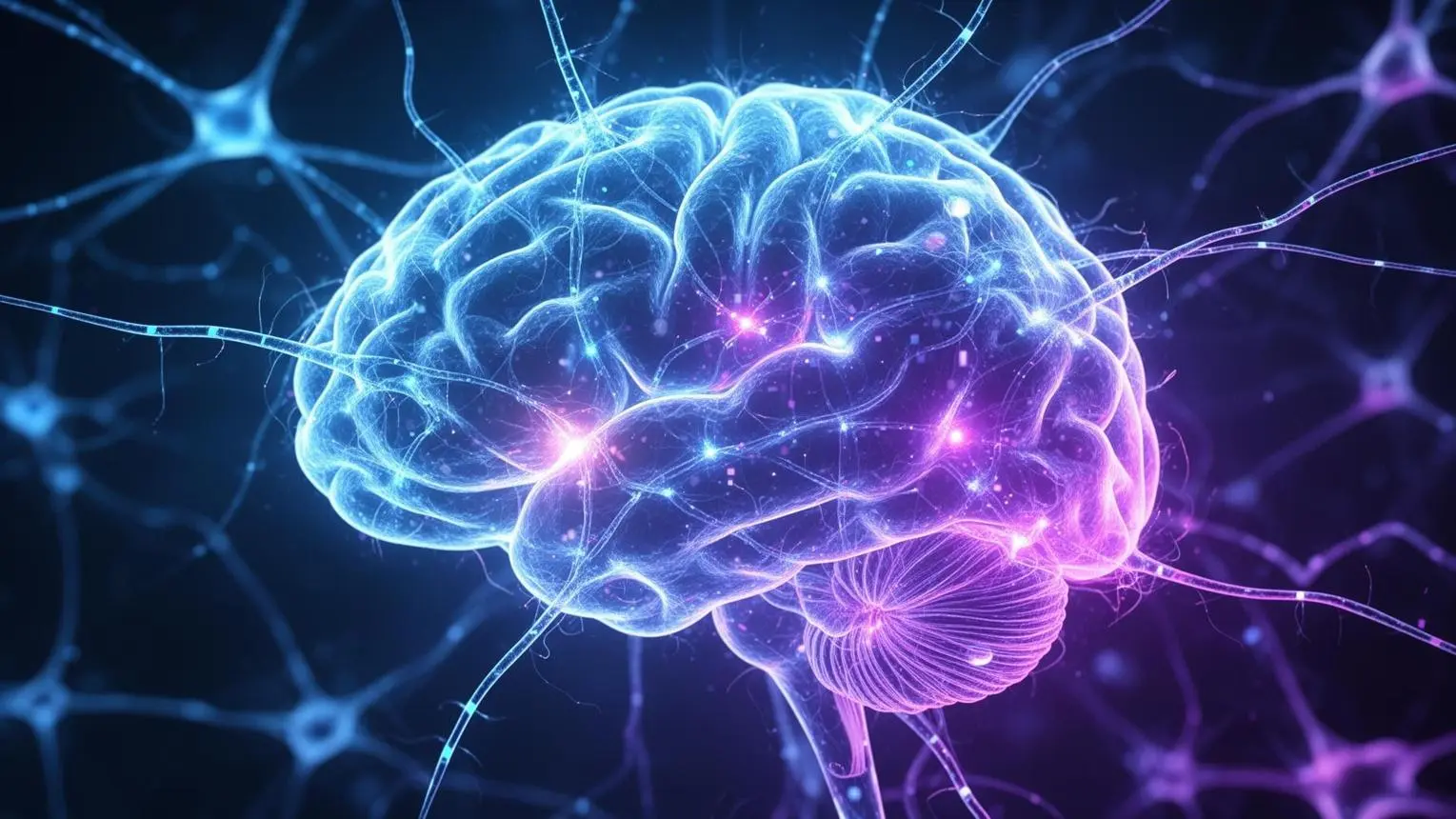
One important system is the default mode network, a group of connected brain regions associated with self-referential thinking and mind-wandering.
Research published in Proceedings of the National Academy of Sciences found differences in default mode network activity and connectivity between experienced meditators and non-meditators. These findings suggest potential mechanisms through which meditation relates to attention and awareness. They do not establish that meditation permanently rewires every brain in the same way.
Meditation invites us to observe thoughts without automatically reacting to them. Over time, this may help develop a more deliberate relationship with our thoughts and emotions.
2. Meditation and emotional well-being
Stress is a natural part of life, but prolonged stress can affect our well-being and daily functioning.
A systematic review published in JAMA Internal Medicine examined 47 clinical trials and found moderate evidence that mindfulness meditation programs can produce small to moderate improvements in anxiety, depression, and pain.
A later randomized clinical trial published in JAMA Psychiatry found that an eight-week mindfulness-based stress reduction program was noninferior to escitalopram for anxiety symptom improvement in the study population. This does not mean meditation should replace prescribed medication or professional care.
Meditation can be a supportive practice for developing emotional awareness, patience, and resilience.
3. Ancient wisdom meets modern understanding
Long before scientific laboratories began investigating meditation, contemplative traditions explored the relationship between breath, attention, awareness, and inner experience.
Yoga traditions developed practices such as dhyana (meditation), while Buddhist traditions cultivated mindfulness and compassionate awareness.
Modern research examines these practices through psychology, neuroscience, and behavioral science.
At Beyond AI Space, we respect both perspectives: ancient traditions offer ways to explore human experience, while scientific research helps us understand which measurable benefits are supported by evidence.
4. Meditation and conscious living
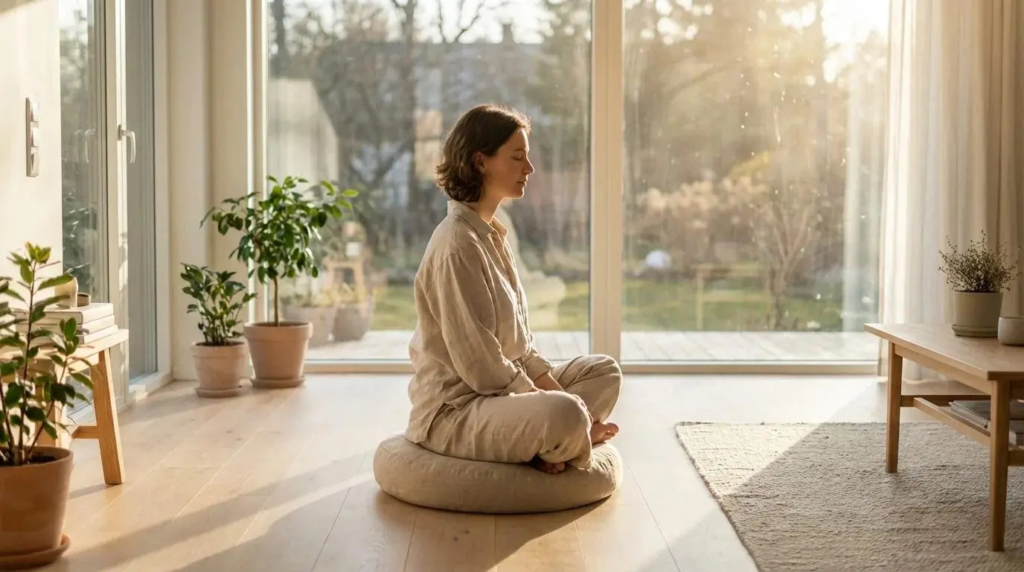
Meditation is not limited to sitting quietly with closed eyes.
Conscious living means bringing greater awareness to ordinary experiences: eating, walking, communicating, making decisions, and responding to challenges.
You can practice mindfulness while listening to birds, feeling the breeze, walking through a garden, or enjoying a quiet moment with a cup of tea.
These experiences offer opportunities to return your attention to the present.
5. A simple five-minute meditation practice
Minute 1 — Settle
Sit comfortably and allow your body to relax.
Minute 2 — Breathe
Notice your natural breathing without forcing it.
Minute 3 — Observe
Allow thoughts to come and go without judgment.
Minute 4 — Reconnect
Notice sensations in your body and the sounds around you.
inute 5 — Set an intention
Choose one quality to bring into your day, such as kindness, patience, or clarity.
If closing your eyes feels uncomfortable, keep them open. Meditation should be approached gently, and people who experience distress may benefit from guidance or a different practice.
6. Meditation is a practice, not a destination
The purpose of meditation is not to eliminate every thought or achieve a permanently peaceful mind.
It is to develop awareness of what is happening within and around us.
Some days will feel peaceful. Other days the mind may be restless. Both experiences are part of learning.
At Beyond AI Space, we encourage simple practices that can become part of everyday living, regardless of age, profession, culture, or religious background.
Begin your journey with Beyond AI Space
Explore our meditation, mindfulness, and conscious living programs designed to help you cultivate awareness, reconnect with nature, and bring greater intention into everyday life.
Discover your potential. Reconnect with yourself. Live consciously.
Visit Beyond AI Space to explore our programs.
Scientific research papers to link in your blog
These are real published studies and authoritative research resources. I recommend displaying them at the end of your article under Scientific References & Further Reading.
1. Meditation Programs for Psychological Stress and Well-Being (2014)
JAMA Internal Medicine — systematic review of 47 clinical trials examining meditation and psychological well-being.
Read the full research paper
2. Meditation Experience and Brain Network Activity (2011)
PNAS — research examining brain activity and connectivity in experienced meditators.
Read the full research paper
3. Mindfulness-Based Stress Reduction and Anxiety Disorders (2022)
JAMA Psychiatry — randomized clinical trial comparing an eight-week mindfulness program with escitalopram.
Read the full research paper
4. Meditation and Mindfulness: Effectiveness and Safety
U.S. National Institutes of Health (NCCIH) — evidence overview of meditation benefits, limitations, and safety.
Read the research overview