
Understanding the Body: Anatomy & Yoga Stretches
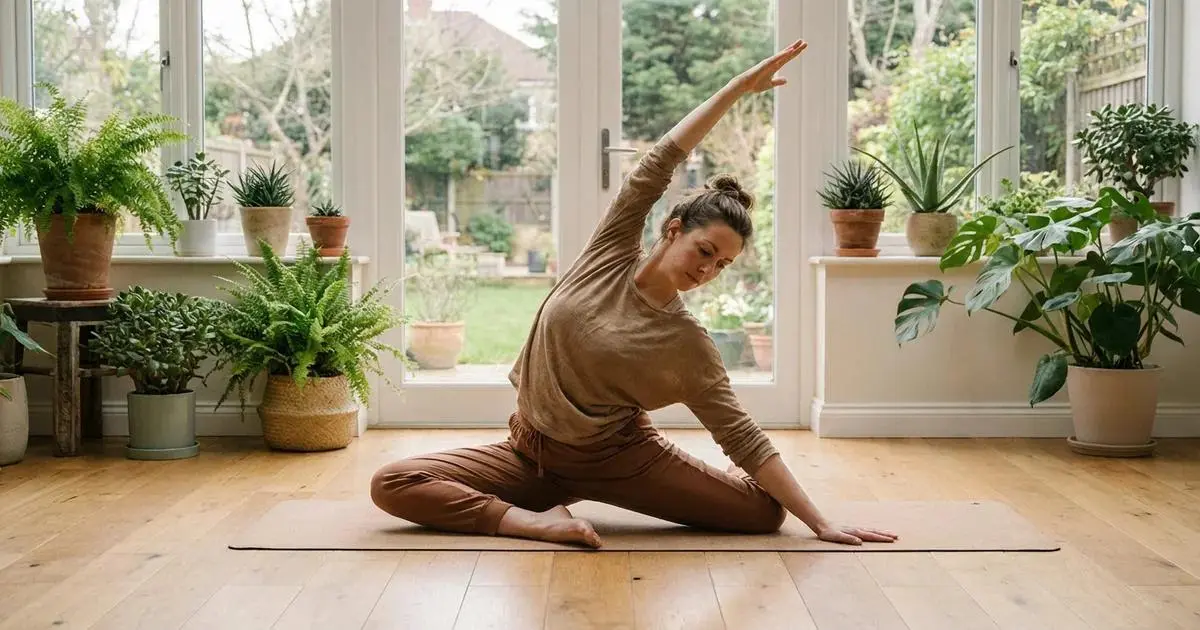
Discover how your muscles, joints, spine, and breath work together—and how gentle yoga stretches can help you move with greater awareness.
By Komala Thimmappa
Founder, Beyond AI Space | Certified Yoga Teacher
Your body is an extraordinary living system. Every time you bend, stretch, walk, breathe, or turn your head, muscles, bones, joints, nerves, and connective tissues work together.
Yet many of us move through daily life without understanding how our bodies function.
We may spend hours sitting, looking at screens, driving, or repeating the same movements. Over time, some movements can begin to feel less comfortable or less familiar.
Yoga offers an opportunity to explore the body through gentle movement, breathing, and awareness.
But understanding basic anatomy can make that experience more meaningful.
The purpose of yoga is not to force the body into a perfect pose. It is to develop a better relationship with the body you have.
1. Understanding Your Body: The Basics of Anatomy
The human musculoskeletal system includes bones, muscles, joints, tendons, ligaments, and other connective tissues.
Each has an important function.
Bones provide structure and help protect internal organs.
Muscles contract to produce movement and help maintain posture.
Joints connect bones and allow different types of movement.
Tendons connect muscles to bones, transmitting the forces involved in movement.
Ligaments connect bones to other bones and help stabilize joints.
The nervous system coordinates movement and provides information about body position, pressure, and discomfort.
Yoga involves all these systems.
For example, when you raise your arms overhead, the shoulder joints move, surrounding muscles coordinate the action, and your nervous system helps control the position.
When you understand these relationships, you can practice with greater attention rather than simply copying a pose.
2. Flexibility, Mobility, and Strength: What Is the Difference?
These three terms are related, but they are not identical.
Flexibility
Flexibility describes the ability of muscles and related tissues to allow movement through a joint’s available range.
Mobility
Mobility is the ability to move a joint through its available range with control.
Strength
Strength is the capacity of muscles to generate force.
A person can be flexible but have difficulty controlling a movement. Another person may be strong but have a relatively limited range of motion.
A well-rounded movement routine develops flexibility, mobility, strength, and balance.
Yoga can contribute to several of these abilities, depending on the poses, intensity, and consistency of practice.
3. The Spine: Understanding Your Body’s Central Support
Your spine is made up of vertebrae, intervertebral discs, joints, ligaments, and surrounding muscles.
It has several regions:
Cervical spine: Neck
Thoracic spine: Upper and middle back
Lumbar spine: Lower back
Sacrum and coccyx: Lower end of the spinal column
The spine supports your body, protects the spinal cord, and allows movement.
Different regions are naturally suited to different amounts and directions of motion.
Yoga poses such as Cat–Cow gently explore spinal flexion and extension, while other poses involve rotation or side bending.
The goal is not to make every part of the spine move equally. It is to move within your own comfortable range.
4. Five Gentle Yoga Stretches and the Anatomy Behind Them
Stretch 1: Cat–Cow Pose (Marjaryasana–Bitilasana)
Body areas involved: Spine, trunk muscles, shoulders, and pelvis.
How to practice:
Begin on your hands and knees, or use a supported seated variation.
Inhale and gently lengthen through your chest, allowing a comfortable spinal extension.
Exhale and slowly round your back within a pain-free range.
Repeat five to eight times with natural, comfortable breathing.
Anatomy connection: The movement alternates between spinal flexion and extension while the trunk and shoulder muscles coordinate to support the body.
Why practice it? It provides an accessible way to explore spinal movement and body awareness.
Avoid forcing the neck or lower back into extreme positions.
Stretch 2: Child’s Pose (Balasana)
Body areas involved: Hips, knees, ankles, back, and shoulders.
How to practice:
Begin kneeling, using cushioning as needed.
Move your hips back only as far as comfortable.
Reach your arms forward or rest them beside your body.
Support your chest or forehead with cushions if helpful.
Breathe comfortably for approximately 15–30 seconds.
Anatomy connection: The position involves hip and knee flexion and can place a gentle stretch through parts of the back and shoulders.
Why practice it? It can be a restful position for some people, but it is not suitable for everyone.
People with knee pain, restricted hip movement, or discomfort in deep bending should modify or skip it.
Stretch 3: Gentle Seated Spinal Rotation
Body areas involved: Trunk muscles, thoracic spine, and surrounding tissues.
How to practice:
Sit upright in a stable chair.
Keep both feet supported.
Slowly rotate your upper body a small amount to one side.
Avoid pulling yourself deeper with your arms.
Return to the center and repeat on the other side.
Anatomy connection: Trunk rotation involves coordinated movement of the spinal joints and muscles, including the obliques.
Why practice it? Gentle rotation allows you to explore comfortable trunk movement.
People with spinal injuries, recent surgery, or conditions that restrict twisting should obtain individualized guidance.
Stretch 4: Supported Standing Hip Flexor Stretch
Body areas involved: Front of the hips, hip flexor muscles, and lower-body stabilizers.
How to practice:
Stand near a wall or sturdy chair for support.
Step one foot back into a short, comfortable staggered stance.
Keep your torso upright and gently bend the front knee.
Slightly tuck your pelvis without arching your lower back.
Stop when you feel a mild stretch near the front of the back hip.
Hold briefly, then change sides.
Anatomy connection: Hip flexors, including the iliopsoas group, help bring the thigh toward the torso and participate in hip movement.
Why practice it? It can help you explore hip extension, a movement that may receive less attention during prolonged sitting.
Stretch 5: Mountain Pose with Gentle Overhead Reach (Tadasana Variation)
Body areas involved: Legs, trunk, shoulders, and upper back.
How to practice:
Stand comfortably with feet supported.
Allow your shoulders to relax.
Slowly lift your arms forward or outward as high as comfortable.
Keep your breathing natural and avoid excessive back arching.
Lower your arms and repeat several times.
Anatomy connection: Shoulder movement requires coordination between the upper arm, shoulder blade, and surrounding muscles.
Why practice it? It encourages awareness of standing alignment, balance, and comfortable shoulder movement.
If overhead movement causes pain, reduce the range or keep the arms below shoulder height.
5. How Does Stretching Affect the Muscles?
Stretching is more complex than simply making a muscle longer.
When you stretch, you temporarily place tension on muscles and other tissues. Your nervous system also influences how far a movement feels comfortable.
With consistent practice, your available range of motion may increase.
A 2024 systematic review and meta-analysis reported that stretching programs lasting at least two weeks can improve joint range of motion.
Another systematic review published in 2023 found that longer-term static stretching can reduce measured muscle stiffness under certain conditions.
These findings do not mean that every yoga pose permanently lengthens a muscle or that more stretching is always better.
Progress depends on the individual, the movement, and the training program.
6. The Connection Between Breathing and Movement
Breathing involves the diaphragm, intercostal muscles, and other muscles that assist respiration.
The diaphragm is the primary muscle of quiet breathing.
During inhalation, it contracts and moves downward, helping expand the chest cavity. During exhalation at rest, it relaxes.
In yoga, breathing can also serve as a practical way to focus attention on movement.
Try this simple exercise:
Sit comfortably.
Relax your shoulders.
Inhale gently through your nose if comfortable.
Exhale naturally without forcing the breath.
Continue for five slow, comfortable breaths.
Notice the movement of your rib cage and abdomen.
There is no need to hold your breath or force unusually deep breathing.
7. What Does Scientific Research Say About Yoga?
Yoga has been studied for flexibility, balance, general well-being, and several health conditions.
Research suggests that yoga may support balance, sleep, stress management, and mental well-being, although the strength of evidence differs across outcomes.
Yoga and Chronic Lower Back Pain
A 2022 Cochrane systematic review included 21 trials with 2,223 participants.
It found that yoga produced small improvements in pain and back-related function compared with no exercise, but those differences were generally too small to be considered clinically important.
Yoga appeared broadly comparable to other back-focused exercise for improving function.
This is an important finding: yoga may be a useful movement option, but it is not necessarily superior to other appropriate exercise.
Stretching and Range of Motion
A 2024 systematic review examined the longer-term effects of stretching and found that consistent stretching can improve joint range of motion.
This supports the idea that regular practice—not forcing an extreme stretch in a single session—is important.
Yoga and General Well-Being
The U.S. National Center for Complementary and Integrative Health reports that yoga may support general well-being, balance, sleep, and stress management.
However, outcomes depend on the individual and the type of practice.
8. A Gentle 10-Minute Yoga and Body-Awareness Routine
You do not need a complicated routine to begin exploring mindful movement.
| Time | Practice |
|---|---|
| 1 minute | Comfortable seated breathing |
| 2 minutes | Cat–Cow or seated spinal movement |
| 2 minutes | Gentle seated spinal rotation |
| 2 minutes | Supported standing hip flexor stretch |
| 2 minutes | Mountain Pose with overhead reach |
| 1 minute | Quiet standing or seated body awareness |
Move slowly and adapt the sequence to your comfort.
A stretch should feel manageable, not painful.
If you experience sharp pain, dizziness, numbness, or increasing symptoms, stop the activity. Seek appropriate medical advice if symptoms are significant or persist.
9. Yoga for Different Ages and Abilities
Yoga does not have to look the same for everyone.
For beginners: Focus on basic movements, balance, and comfortable breathing.
For people who work at desks: Gentle shoulder, hip, and trunk movements may help introduce variety into the day.
For older adults: Supported standing poses, chair-based movements, and balance training may be appropriate when tailored to individual ability.
For active individuals: Yoga can complement strength training and other physical activities.
People with osteoporosis, joint replacements, spinal disorders, recent surgery, pregnancy, balance difficulties, or other medical concerns may require specific modifications.
A qualified yoga instructor and an appropriate healthcare professional can help identify suitable movements.
10. Beyond the Stretch: Learning to Listen to Your Body
Yoga is not a competition in flexibility.
You do not have to touch your toes, perform advanced postures, or look like someone in a photograph to benefit from mindful movement.
Instead, begin with three questions:
How does my body feel today?
Which movements feel comfortable and controlled?
What can I practice consistently without forcing myself?
Body awareness develops through curiosity and attention.
When we begin to understand how our bodies move, we can make more thoughtful choices about physical activity, rest, and everyday habits.
The Beyond AI Space Perspective
At Beyond AI Space, we believe conscious living begins with awareness.
Understanding your anatomy helps you appreciate the remarkable coordination within the human body. Yoga offers one way to explore that coordination through movement, attention, and breath.
Our approach brings together traditional practices, nature-inspired wellness, and scientific understanding.
We encourage people to explore movement in ways that respect their individual bodies, abilities, and life stages.
Your body is not something to conquer. It is something to understand, respect, and care for.
Continue Your Wellness Journey
Explore nature-inspired wellness, mindfulness, yoga, and conscious living with Beyond AI Space.
Visit www.beyondaispace.com.
Frequently Asked Questions
What is yoga anatomy?
Yoga anatomy is the study of how muscles, bones, joints, connective tissues, and the nervous system participate in yoga movements and postures.
Can yoga improve flexibility?
Regular yoga that includes appropriate stretching may improve joint range of motion over time. Results depend on consistency, the movements practiced, and individual factors.
Is 10 minutes of yoga a day enough?
Ten minutes can be a practical starting point for developing movement awareness and consistency. Broader fitness benefits depend on the overall amount and type of physical activity.
Which yoga poses are best for beginners?
Gentle Cat–Cow movements, supported Mountain Pose variations, and comfortable chair-based movements are accessible starting options for many people.
Can yoga help with lower back pain?
Research suggests small benefits for some people with chronic nonspecific lower back pain. Yoga is not a substitute for diagnosis or individualized treatment, and some poses may worsen symptoms.
Is yoga safe for older adults?
Yoga can be adapted for older adults, but balance limitations, medical conditions, and joint or spinal concerns may require modifications and professional guidance.
Educational disclaimer: This article is for general education and wellness awareness. It is not a substitute for individualized medical assessment, diagnosis, treatment, or rehabilitation advice.
Contact Us
Recent Posts

Food as Medicine: Ayurveda & Herbs for Healing
Ancient wisdom, everyday nourishment, and what modern science tells us about the healing potential of food. By Komala ThimmappaFounder, Beyond AI Space What if one
Understanding the Body: Anatomy & Yoga Stretches
Discover how your muscles, joints, spine, and breath work together—and how gentle yoga stretches can help you move with greater awareness. By Komala ThimmappaFounder, Beyond
Know Your Chakras, Mudras & Meditations
Explore the seven chakras, the meaning of traditional hand mudras, and simple meditation practices to cultivate awareness, balance, and inner peace. By Komala ThimmappaFounder, Beyond

The Human Aura: Understanding Energy, Emotions & the Science of the Body
Exploring ancient beliefs, the mystery of human energy, and what modern science reveals about the invisible processes within us. By Komala ThimmappaFounder, Beyond AI Space

Look Younger, Naturally: Skin Care, Hair Care, Herbal Oils & Nutrition for Healthy Aging
Discover how traditional beauty rituals, nourishing foods, botanical oils, and simple everyday habits can support healthy-looking skin and hair at every age. By Komala ThimmappaFounder,

Situational Depression & Anxiety: Understanding the Causes and Supporting Recovery Naturally
How stressful life events affect our emotional well-being—and how nature, movement, mindfulness, healthy routines, and human connection can help us move toward recovery. By Komala