
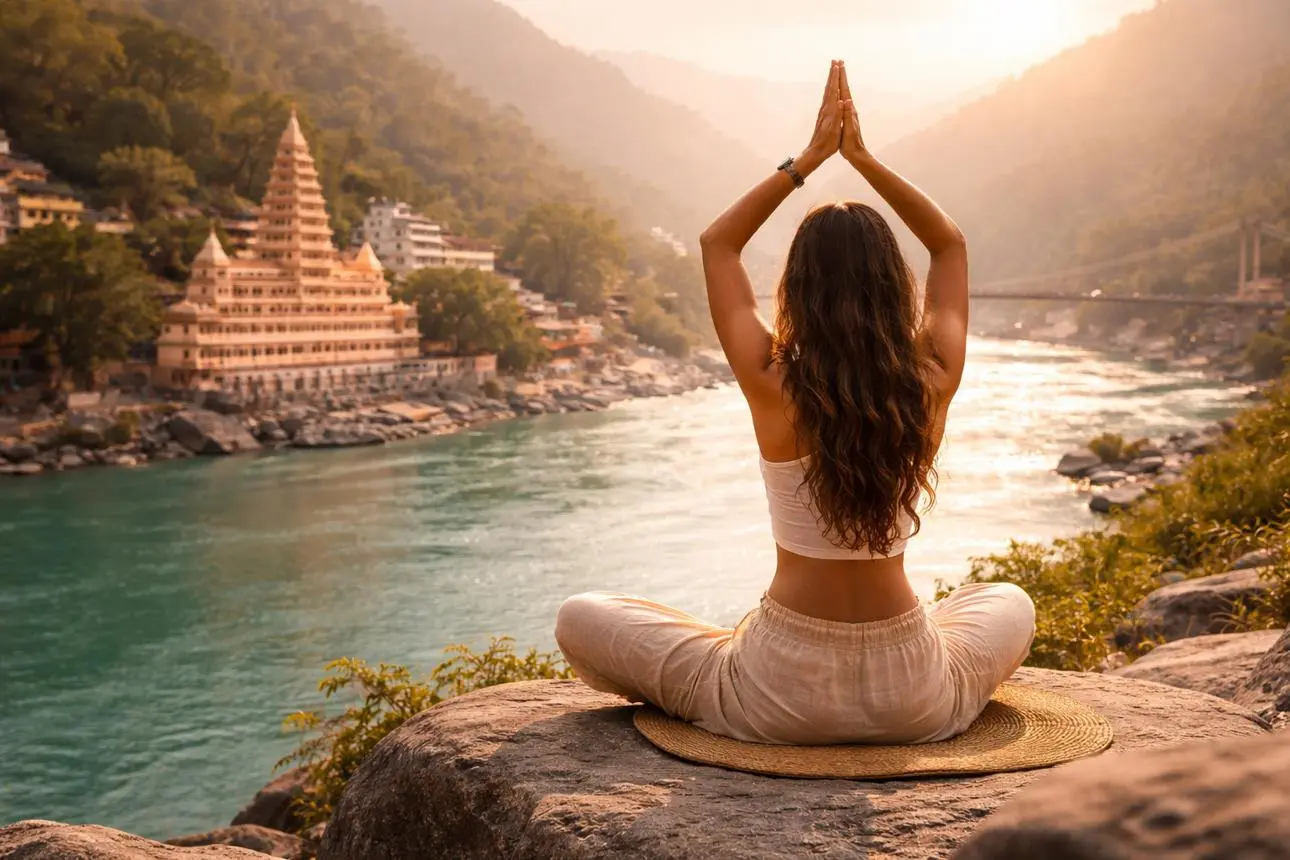

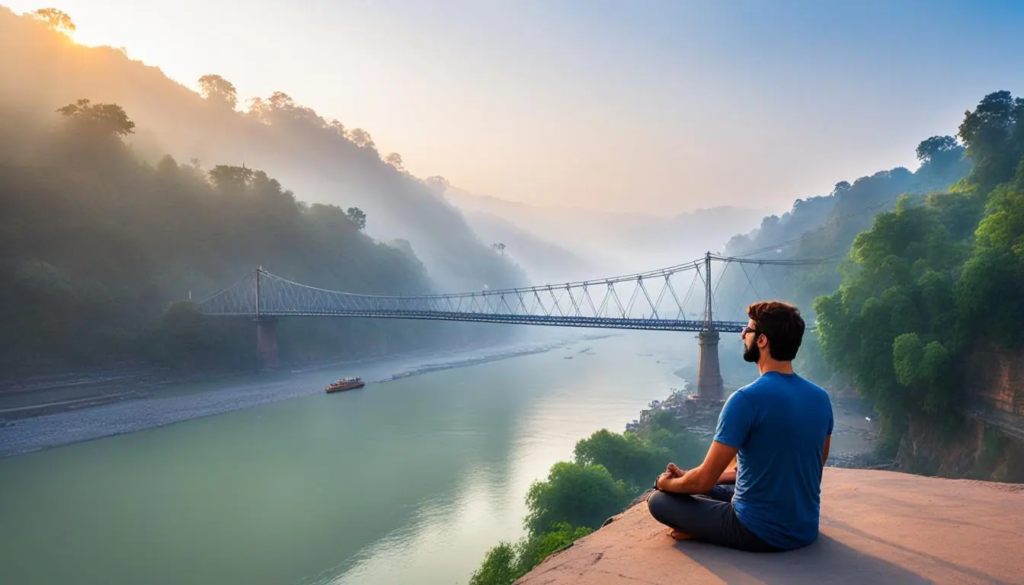
Nestled in the foothills of the Himalayas in Uttarakhand, Rishikesh is internationally recognized as a center for yoga, meditation, and spiritual learning.
The Ganges flows through the city, surrounded by forested hills, traditional ashrams, yoga schools, and places of contemplation.
India’s official tourism portal describes Rishikesh as the Yoga Capital of the World, attracting visitors from across the globe to study traditional practices.

Visitors can explore experiences such as traditional Hatha yoga, pranayama, guided meditation, yoga philosophy, teacher training, and peaceful walks in nature.
Rishikesh is also famous for the Beatles’ 1968 visit to Maharishi Mahesh Yogi’s ashram, where they studied Transcendental Meditation. Their visit helped introduce Indian meditation traditions to a much wider international audience.

The Himalayan foothills offer a distinctive setting for people seeking rest, reflection, and renewal.
Visitors can choose between simple traditional ashrams, structured yoga schools, nature retreats, and luxury wellness resorts.
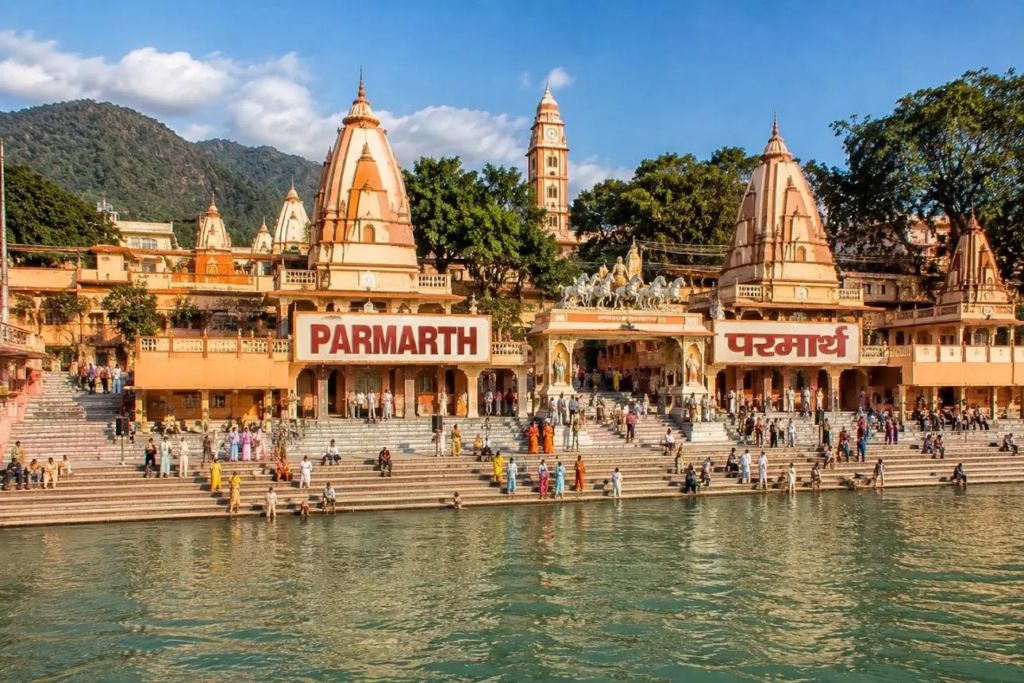
Uttarakhand Tourism identifies several established yoga and wellness centers in the region, including Parmarth Niketan, Sivananda Ashram, and Ananda in the Himalayas.
These experiences vary significantly. Some emphasize disciplined spiritual study and communal living, while others focus on comfortable accommodations, spa services, yoga, and relaxation.
Nature can also be an important part of the experience.
Research suggests that exposure to natural environments may help reduce perceived stress and support psychological well-being. A 2026 review in Nature Human Behaviour examined a substantial body of research on nature-based interventions for stress, anxiety, and depression.

Although natural environments cannot guarantee healing or replace medical treatment, they may provide supportive settings for relaxation and healthier routines.

Steve Jobs — A search for meaning beyond technology
In 1974, long before Apple became a global technology company, Steve Jobs traveled to India seeking spiritual understanding.
His journey included a visit to Kainchi Dham, associated with Neem Karoli Baba, who had died before Jobs arrived. Jobs later described how his time in India influenced his appreciation of intuition and contemplative thinking.
His authorized biography by Walter Isaacson documents this chapter of his life.

Read about Steve Jobs’ spiritual journey

Mark Zuckerberg — Reconnecting with purpose
During a difficult period in Facebook’s early history, Mark Zuckerberg sought advice from Steve Jobs.
In a public discussion in 2015, Zuckerberg described how Jobs encouraged him to visit a temple in India to reconnect with his company’s mission.
Zuckerberg subsequently traveled to Kainchi Dham, a place associated with Neem Karoli Baba. He described the journey as meaningful to his understanding of Facebook’s purpose.


Julia Roberts — Exploring Indian spirituality
While promoting Eat Pray Love, Julia Roberts publicly discussed her interest in Hinduism and Indian spiritual traditions.
In 2010, she described herself as a practicing Hindu and spoke about visiting temples with her family.
Her experience shows how Indian philosophy and spiritual practices have resonated with people beyond India’s cultural and geographical boundaries.
Read Julia Roberts’ interview coverage
These journeys were personal and different from one another. Steve Jobs’ and Zuckerberg’s visits to Kainchi Dham were separate from the yoga-retreat traditions of Rishikesh, while Roberts’ interest developed through her own experiences and beliefs.
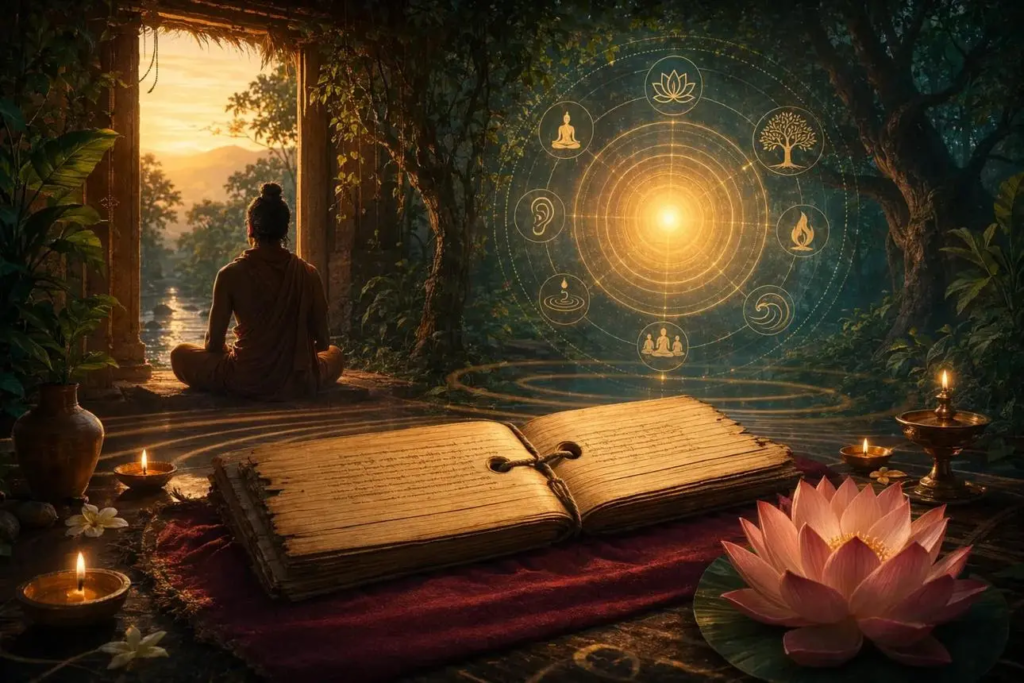
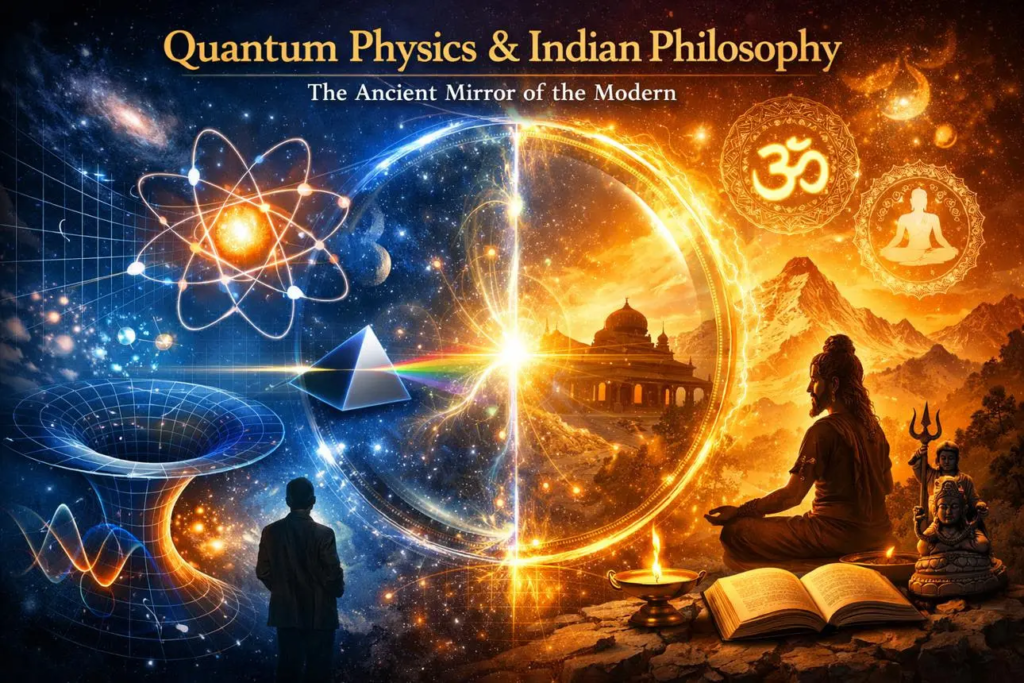
One of the most intriguing modern conversations concerns the relationship between ancient Indian philosophy and quantum physics.
Quantum mechanics describes the behavior of matter and energy at microscopic scales through mathematical theories and experimentally tested predictions.
Indian philosophical traditions explore consciousness, perception, identity, causation, and the nature of existence.
Some scholars and science writers have identified conceptual parallels between these subjects, especially around interconnectedness, the nature of observation, and the limitations of everyday intuition.
A 2025 article in Philosophy Now explores these comparisons while emphasizing that philosophical similarities are not scientific equivalence.

Consider three examples:
Indian philosophical idea | Modern physics concept | Important distinction |
|---|---|---|
Advaita Vedanta explores nonduality | Quantum entanglement reveals correlations between quantum systems | Entanglement does not demonstrate universal consciousness |
Indian traditions examine the observer and awareness | Quantum measurement affects how physical systems are described and observed | A conscious human observer is not required for quantum measurement |
Philosophical traditions explore the changing nature of reality | Quantum mechanics challenges some classical intuitions about matter | Similar language does not mean the theories describe the same mechanisms |
A 2024 philosophical paper also discusses possible points of contact between Advaita Vedanta, Buddhist thought, and quantum mechanics. These comparisons are speculative philosophical interpretations, not experimental confirmation of spiritual doctrines.

The value of this dialogue is not in claiming that ancient sages discovered modern quantum mechanics.
It is in recognizing that science and philosophy ask different, sometimes overlapping questions about reality.
Science helps us investigate how the physical universe behaves. Philosophy helps us examine what existence, knowledge, and experience mean.
Both can inspire curiosity without being confused with one another.
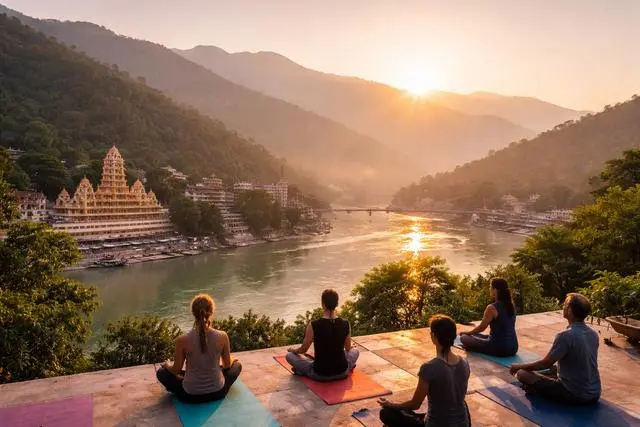
Beyond their philosophical significance, several traditional Indian wellness practices have been investigated scientifically.
A 2024 systematic review and meta-analysis of yoga interventions in stressed adults reported evidence of short-term stress reduction, although the overall certainty of evidence was low.

Another systematic review examined the effects of individual sessions of yoga, meditation, and breathing practices on acute stress responses. Many included studies reported favorable results, but further high-quality research is needed.
The U.S. National Institutes of Health also recognizes that yoga may support some aspects of physical and psychological well-being, while emphasizing that benefits depend on the condition, intervention, and quality of available evidence.

These findings help explain why yoga, meditation, and nature-based practices can form valuable parts of wellness tourism.
They do not establish that every retreat or traditional therapy produces measurable medical benefits.


Food as Medicine: Ayurveda & Herbs for Healing
Ancient wisdom, everyday nourishment, and what modern science tells us about the healing potential of food. By Komala ThimmappaFounder, Beyond AI Space What if one

Understanding the Body: Anatomy & Yoga Stretches
Discover how your muscles, joints, spine, and breath work together—and how gentle yoga stretches can help you move with greater awareness. By Komala ThimmappaFounder, Beyond
Know Your Chakras, Mudras & Meditations
Explore the seven chakras, the meaning of traditional hand mudras, and simple meditation practices to cultivate awareness, balance, and inner peace. By Komala ThimmappaFounder, Beyond
The Human Aura: Understanding Energy, Emotions & the Science of the Body
Exploring ancient beliefs, the mystery of human energy, and what modern science reveals about the invisible processes within us. By Komala ThimmappaFounder, Beyond AI Space

Look Younger, Naturally: Skin Care, Hair Care, Herbal Oils & Nutrition for Healthy Aging
Discover how traditional beauty rituals, nourishing foods, botanical oils, and simple everyday habits can support healthy-looking skin and hair at every age. By Komala ThimmappaFounder,

Situational Depression & Anxiety: Understanding the Causes and Supporting Recovery Naturally
How stressful life events affect our emotional well-being—and how nature, movement, mindfulness, healthy routines, and human connection can help us move toward recovery. By Komala