
The Human Aura: Understanding Energy, Emotions & the Science of the Body
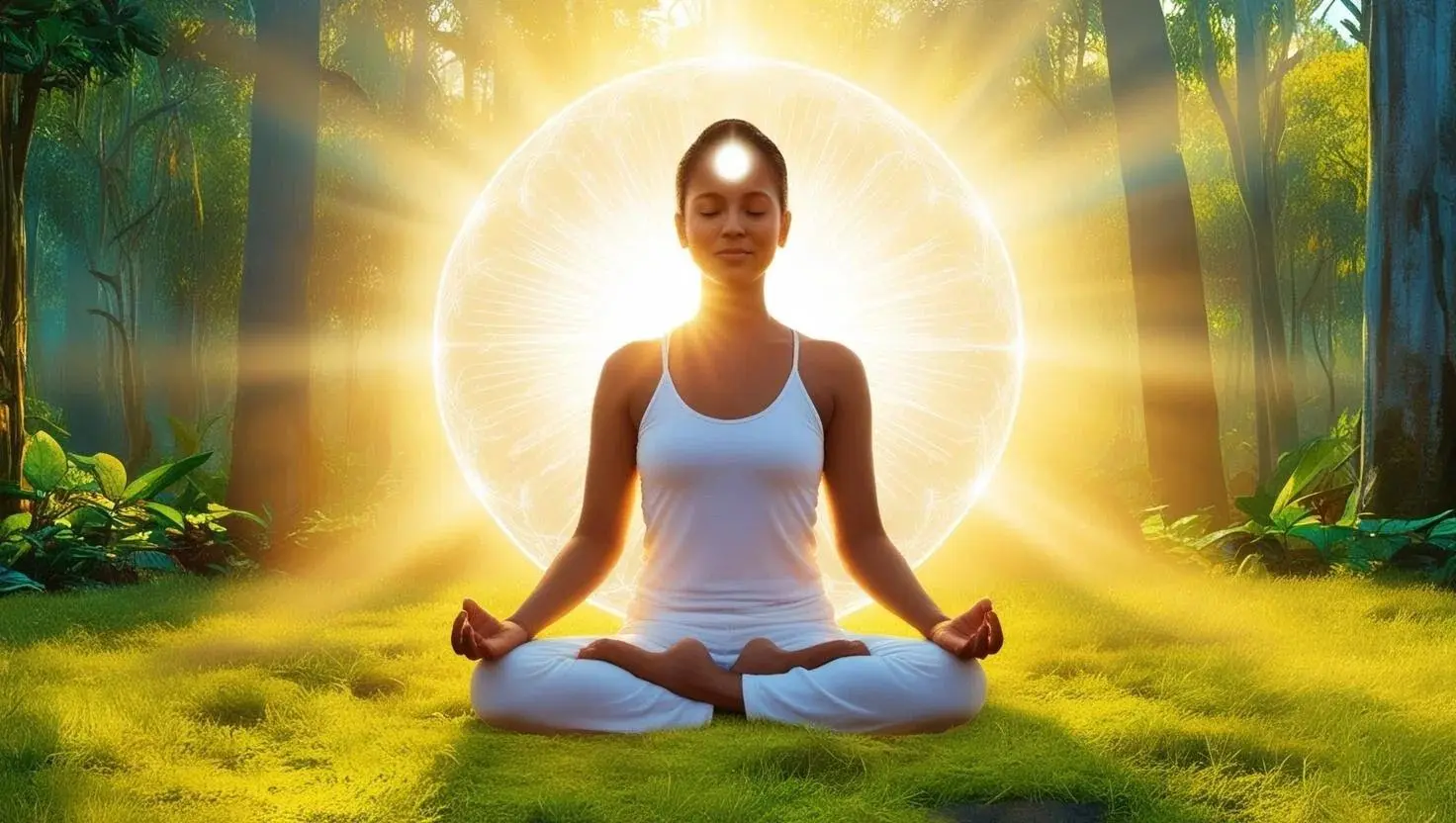
Exploring ancient beliefs, the mystery of human energy, and what modern science reveals about the invisible processes within us.
By Komala Thimmappa
Founder, Beyond AI Space
Have you ever met someone whose presence immediately made you feel comfortable?
Or entered a room where the atmosphere seemed tense, even before anyone spoke?
We often describe these experiences using expressions such as “positive energy,” “good vibes,” or “a calming presence.”
Across different spiritual traditions, the idea of a human aura has been used to describe an invisible field believed to surround living beings.
But what exactly is an aura? Can it be seen or measured? And how does it relate to the electrical and magnetic activity that science can detect in the human body?
Understanding these questions offers an opportunity to explore traditional wisdom, human perception, and modern scientific discoveries.
1. What Is the Human Aura?
In contemporary spiritual and holistic wellness traditions, the human aura is often described as a subtle field of energy surrounding the physical body.
Some belief systems describe it as a luminous field with different colors, layers, or vibrations.
These colors are traditionally interpreted as symbols of emotional, mental, or spiritual states.
However, there is currently no reliable scientific evidence establishing the existence of a multicolored spiritual aura surrounding the body.
This does not mean that the human body is inactive or without measurable energy.
Our bodies continuously produce electrical signals, generate heat, and carry out complex physiological processes.
The distinction is that these measurable phenomena are not the same as the aura described in spiritual traditions.
2. The Human Aura in Traditional Beliefs
The idea of subtle energy appears in several cultural and philosophical traditions.
Prana in Yogic Traditions
In Indian yogic philosophy, prana is often understood as vital life force.
Traditional practices involving breath, meditation, and movement are sometimes described as ways to cultivate or direct prana.
Prana is a philosophical and spiritual concept rather than a scientifically established form of physical energy.
Qi in Chinese Traditions
In traditional Chinese philosophy and medicine, qi is a foundational concept associated with vitality and the functioning of living systems.
Practices such as qigong and tai chi incorporate movement, breathing, and focused attention.
The traditional concept of qi should not be confused with electromagnetic fields measured by scientific instruments.
The Aura in Modern Spiritual Wellness
Modern aura interpretations frequently associate a person’s supposed energy field with emotions, personality, and spiritual development.
These ideas may serve as tools for personal reflection, but they are not validated methods of diagnosing physical or psychological conditions.
3. The Seven Aura Colors and Their Traditional Meanings
Different spiritual traditions and contemporary authors assign different meanings to aura colors.
The following are common modern interpretations rather than scientifically verified characteristics.
| Aura color | Common symbolic interpretation |
|---|---|
| Red | Vitality, grounding, determination |
| Orange | Creativity, enthusiasm, expression |
| Yellow | Confidence, optimism, personal power |
| Green | Compassion, growth, harmony |
| Blue | Calmness, communication, sincerity |
| Indigo | Intuition, contemplation, insight |
| Violet | Spiritual reflection, imagination, purpose |
These colors can be used as themes for meditation or journaling.
For example, someone reflecting on the color green might explore how they express compassion, while someone choosing blue might focus on communication.
A color should not be used to determine someone’s health, personality, or emotional condition.
4. Does the Human Body Really Produce Energy Fields?
Yes, the body produces measurable electrical and magnetic phenomena.
This is one of the most fascinating areas of modern physiology.
The Heart’s Electrical and Magnetic Activity
The heart’s rhythmic activity involves electrical signals that coordinate its contractions.
An electrocardiogram (ECG) records electrical activity using electrodes placed on the body.
The heart also generates extremely weak magnetic fields that can be measured using specialized instruments in a technique called magnetocardiography.
The Brain’s Electrical and Magnetic Activity
The brain contains billions of neurons that communicate through electrical and chemical processes.
An electroencephalogram (EEG) measures patterns of electrical activity using electrodes on the scalp.
Magnetoencephalography (MEG) detects extremely weak magnetic fields associated with neuronal activity.
These technologies demonstrate that the body produces real, measurable biophysical signals.
But they do not establish that thoughts or emotions create a visible colored aura around a person.
Body Heat and Infrared Imaging
Our bodies continuously release heat into the surrounding environment.
Infrared cameras can detect patterns of thermal radiation and create images showing surface temperature differences.
These images are based on physical measurements, not spiritual aura colors.
5. What Is Kirlian Photography?
Kirlian photography is sometimes promoted as a method of photographing a person’s aura.
The technique involves applying high voltage to produce a visible electrical corona discharge around an object.
The resulting images can appear colorful and luminous.
However, research published in Science in 1976 showed that factors such as moisture on the subject’s surface can substantially influence these images.
Kirlian photographs do not provide scientific proof of a spiritual aura, emotional vibration, or medical condition.
They are better understood as images of an electrical phenomenon.
6. Can Emotions Influence How Others Experience Our Presence?
Our emotional state can affect how we communicate and interact.
Facial expressions, body language, voice, posture, and behavior all contribute to how others perceive us.
For example, a person who speaks calmly and listens attentively may help create a comfortable social environment.
Likewise, visible tension or hurried behavior can influence the atmosphere of an interaction.
These everyday experiences may help explain why people use phrases such as “positive energy” or “negative vibes.”
But perceiving someone’s mood through behavior is different from detecting an invisible aura.
7. Aura Cleansing: Spiritual Practice or Scientific Process?
In spiritual wellness communities, aura cleansing may refer to activities such as meditation, visualization, prayer, mindful breathing, or spending time in nature.
There is no established scientific method for measuring whether a spiritual aura has been cleansed.
However, some of the activities included in these rituals—particularly mindfulness and relaxation practices—have been studied independently for their potential effects on stress and well-being.
For someone who finds aura visualization meaningful, it can be approached as a symbolic contemplative exercise.
The benefit should not be attributed to removing a scientifically verified negative energy field.
8. A Gentle Five-Minute Aura-Inspired Meditation
This exercise uses the idea of an aura as a visualization technique.
Minute 1: Find a Comfortable Position
Sit comfortably, with your feet supported or legs relaxed.
Notice the contact between your body and the surface beneath you.
Minute 2: Observe Your Breathing
Allow your breathing to remain natural.
Notice the movement of your chest or abdomen.
Minute 3: Imagine a Gentle Light
If visualization feels comfortable, imagine a soft, warm light surrounding you.
Choose a color that represents a quality you would like to cultivate, such as calmness, compassion, or confidence.
Minute 4: Reflect on Your Intention
Silently repeat a phrase such as:
“I choose to respond with calmness and kindness.”
Minute 5: Return to the Present
Release the visualization.
Notice your surroundings, your posture, and the sounds around you.
This is a reflective practice, not a method of detecting or medically changing an energy field.
If meditation or visualization causes distress, stop and return to ordinary awareness of your surroundings.
9. What Does Scientific Research Say About Biofield Therapies?
The term biofield is used in some integrative-health research to describe proposed energy-based interactions associated with living systems.
It is important to distinguish the term as used in complementary therapy research from the established scientific measurement of electrical and magnetic activity.
A 2025 scoping review identified 353 studies across 352 published reports investigating biofield therapies, including Reiki, Therapeutic Touch, Healing Touch, and related approaches.
The review mapped the research landscape but did not establish the existence of a spiritual aura.
The U.S. National Center for Complementary and Integrative Health states that Reiki has not been clearly shown to be effective for any health-related purpose and that there is no scientific evidence supporting the proposed energy field thought to be involved.
Research into complementary practices can continue while maintaining appropriate standards of evidence.
10. Can We Strengthen Our “Positive Energy”?
Although science does not establish that we can strengthen a spiritual aura, we can cultivate habits that support our general well-being and influence our everyday interactions.
Consider these practices:
Mindful breathing: Take a few moments to notice your breath.
Movement: Include physical activity appropriate to your abilities.
Rest: Make adequate sleep and recovery a priority.
Nature connection: Spend time outdoors when practical.
Compassion: Practice kindness toward yourself and others.
Reflection: Notice the habits, thoughts, and environments that affect how you feel.
These activities do not require belief in an invisible energy field.
They are opportunities to become more attentive to the relationship between our bodies, minds, and surroundings.
11. The Beyond AI Space Perspective: Understanding the Visible and Invisible
At Beyond AI Space, we explore traditional wisdom, conscious living, and modern scientific understanding.
The human aura is a fascinating subject because it invites questions about perception, emotion, physiology, and spirituality.
Some people experience aura concepts as meaningful symbols of personal growth.
Science, meanwhile, reveals an extraordinary world of electrical activity, magnetic signals, heat, and complex biological communication within the human body.
Both perspectives can be discussed respectfully, provided we distinguish personal belief from established scientific findings.
Our goal is not to encourage people to accept every claim without question.
It is to inspire curiosity, awareness, and thoughtful exploration.
The more we understand ourselves, the more consciously we can choose how to live, connect, and care for our well-being.
Explore More with Beyond AI Space
Discover educational programs in mindfulness, meditation, nature-inspired wellness, and conscious living.
Visit Beyond AI Space.
Frequently Asked Questions
What is a human aura?
A human aura is a spiritual concept often described as a subtle energy field surrounding a person. Its existence as a colored or spiritually meaningful field has not been scientifically established.
Can everyone see an aura?
Some people report seeing colors or light around individuals. Such experiences do not establish the existence of a spiritual aura and can have various perceptual explanations.
What do aura colors mean?
Aura colors have different symbolic interpretations in contemporary spiritual traditions. They are not scientifically validated indicators of personality, emotion, or health.
Does the human body produce electromagnetic fields?
Yes. Electrical activity in the heart, brain, nerves, and muscles produces measurable electromagnetic phenomena. These are distinct from the spiritual concept of an aura.
Can a camera photograph an aura?
Some photography techniques create colorful effects around objects. Kirlian photography captures electrical corona discharge rather than a verified spiritual aura.
Can meditation cleanse your aura?
Aura cleansing is a spiritual interpretation, not a scientifically measurable process. Meditation may have benefits for some aspects of mental well-being, but it has not been shown to cleanse a physical aura.
Is the human aura connected to chakras?
Some modern spiritual systems connect aura concepts with chakras. These associations are traditional or symbolic rather than established anatomical or physiological relationships.
Educational disclaimer: This article explores spiritual traditions and scientific research for general education. Aura interpretations and biofield claims should not be used to diagnose or treat medical conditions.
Contact Us
Recent Posts

Food as Medicine: Ayurveda & Herbs for Healing
Ancient wisdom, everyday nourishment, and what modern science tells us about the healing potential of food. By Komala ThimmappaFounder, Beyond AI Space What if one

Understanding the Body: Anatomy & Yoga Stretches
Discover how your muscles, joints, spine, and breath work together—and how gentle yoga stretches can help you move with greater awareness. By Komala ThimmappaFounder, Beyond
Know Your Chakras, Mudras & Meditations
Explore the seven chakras, the meaning of traditional hand mudras, and simple meditation practices to cultivate awareness, balance, and inner peace. By Komala ThimmappaFounder, Beyond
The Human Aura: Understanding Energy, Emotions & the Science of the Body
Exploring ancient beliefs, the mystery of human energy, and what modern science reveals about the invisible processes within us. By Komala ThimmappaFounder, Beyond AI Space

Look Younger, Naturally: Skin Care, Hair Care, Herbal Oils & Nutrition for Healthy Aging
Discover how traditional beauty rituals, nourishing foods, botanical oils, and simple everyday habits can support healthy-looking skin and hair at every age. By Komala ThimmappaFounder,

Situational Depression & Anxiety: Understanding the Causes and Supporting Recovery Naturally
How stressful life events affect our emotional well-being—and how nature, movement, mindfulness, healthy routines, and human connection can help us move toward recovery. By Komala